Back to blog
Nutrition
Psychologie
Perte de Poids
Cravings
Bien-être
Physical Hunger vs Emotional Cravings: How to Regain Control
M
Makelty Team
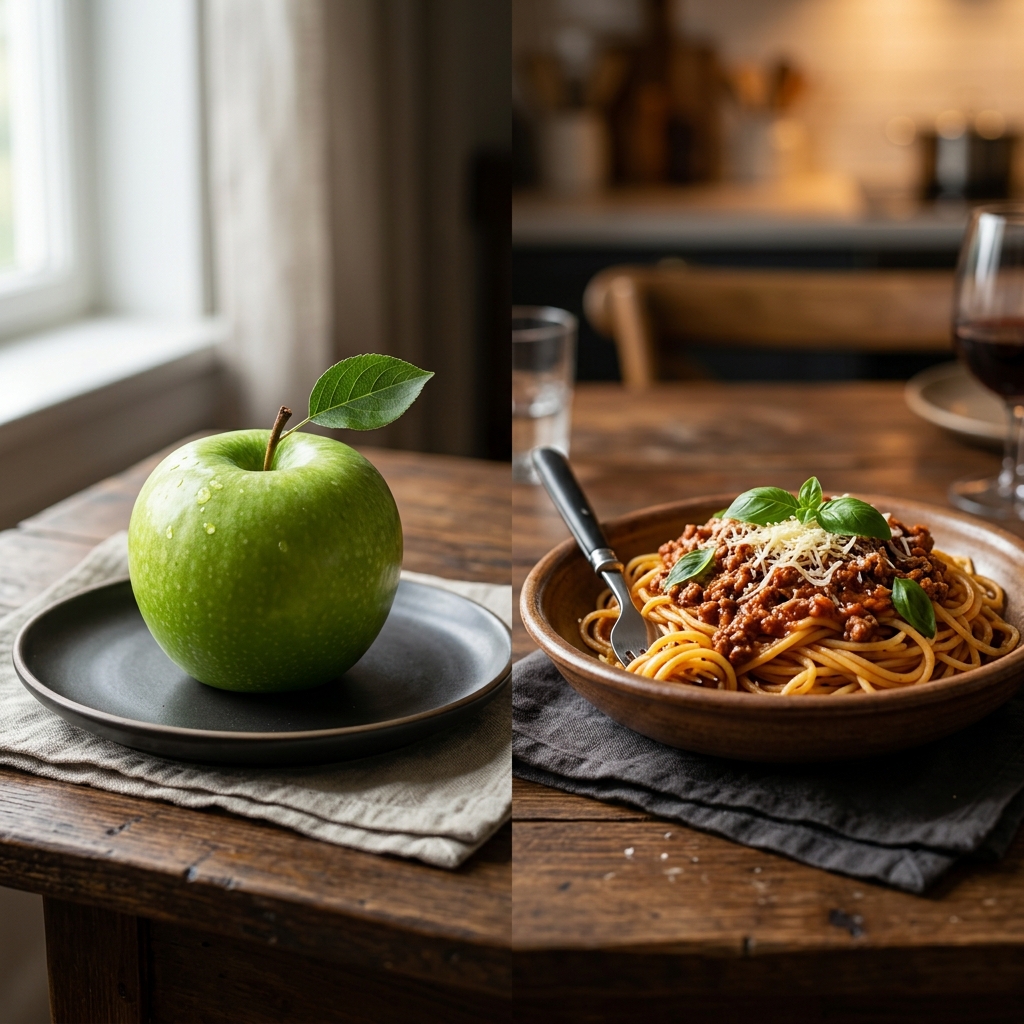
Understanding the Hunger Signal
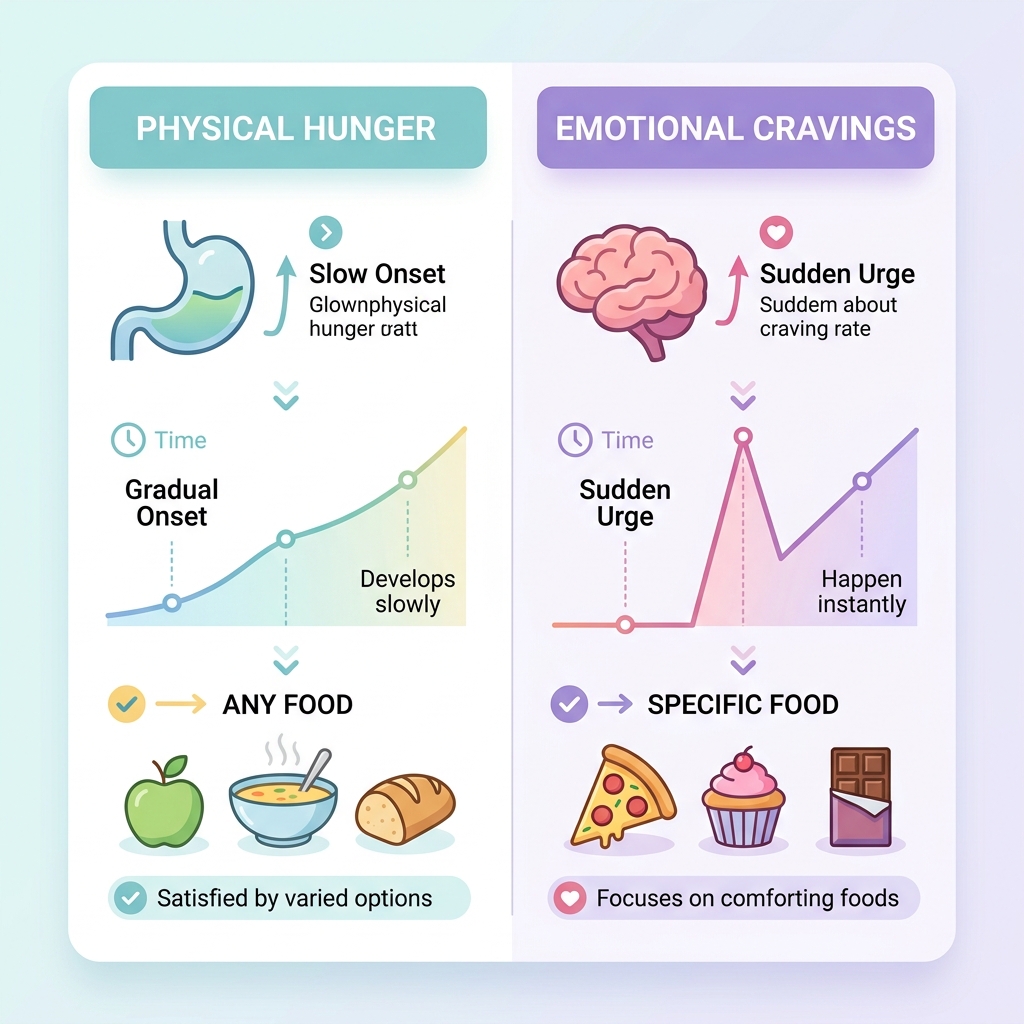
Why do you suddenly have an irresistible craving for a specific dish (like a good plate of spicy Tunisian pasta) when you ate barely two hours ago? This is the fundamental difference between physical hunger and a craving (or emotional hunger).
Physical Hunger (Physiological Need)
Physical hunger is your body's way of communicating that its energy tank is empty.
- Location: It is mainly felt in the stomach (rumbling, hollow sensation).
- Evolution: It appears gradually.
- Selectivity: When you are truly hungry, any food (even a simple apple) will appeal to you.
- Satisfaction: Once full, the signal stops and you feel good.
The Craving (Emotional Desire)
Emotional craving is often the brain's response to an external stimulus or a state of mind.
- Location: It originates in the brain and is often concentrated in the mouth (desire for a specific texture or taste).
- Evolution: It appears suddenly (suddenly, you "need" chocolate).
- Selectivity: You want a very specific food. An apple won't do.
- Satisfaction: Often followed by a feeling of guilt after eating.
The Mechanics of Prohibition
The most common mistake is demonizing certain foods. As experts point out, frustration breeds obsession. The more you categorically forbid yourself a food you crave, the more the brain will focus its attention on it, creating a cycle of stress.
3 Steps to Regain Control
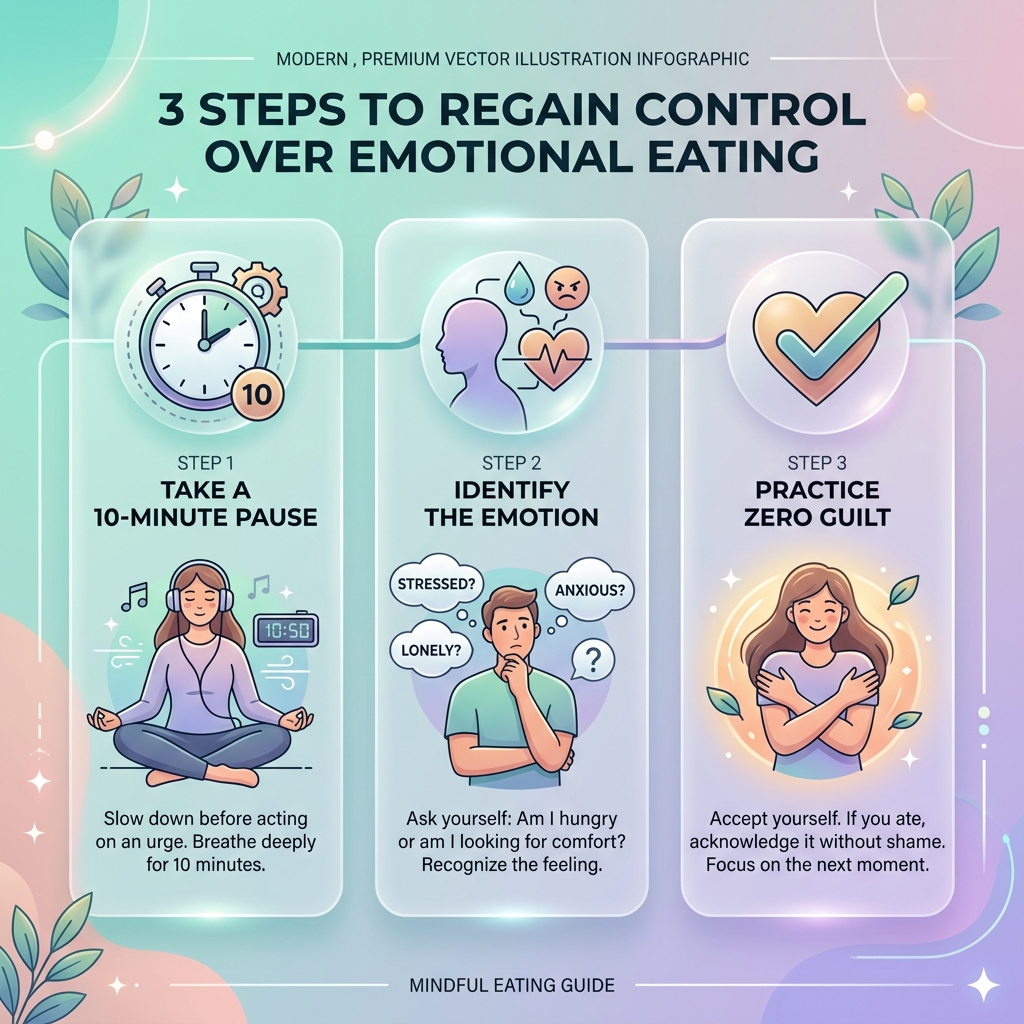
- The 10-minute pause: When a sudden craving appears, wait 10 minutes. Drink a glass of water. If it was boredom or stress, the craving will often pass.
- Identify the emotion: Are you stressed? Tired? Sad? Often, a craving is an attempt to self-medicate with comfort food.
- Zero guilt: If you decide to eat the desired food, do it consciously. Sit down, savor it slowly and without screens, and above all: do not feel guilty. Guilt increases cortisol (the stress hormone), which promotes... fat storage.
Reconciling with food begins with kindly listening to your own body signals.